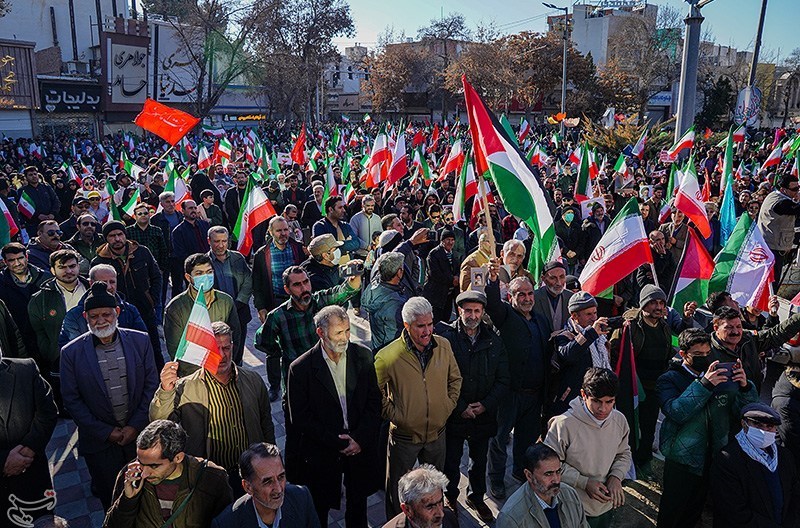
Widespread anti-government protests are sweeping across Iran, fueling fears that the Islamic Republic could face collapse as the death toll surpasses 500 people.
The demonstrations, triggered by a severe economic crisis, have entered their second week with hundreds of thousands of participants. Human rights agencies report that in addition to those killed, more than 10,000 people have been arrested during a heavy-handed government crackdown.
The unrest has sent Brent crude oil prices surging more than 5% to over $63 per barrel. Investors remain concerned about potential supply disruptions from Iran, which is the fourth-largest producer in OPEC.
U.S. President Donald Trump has repeatedly threatened to attack Iran, and military commanders have presented him with several tactical options. To suppress the uprising, the Iranian government has implemented widespread internet and telephone blackouts.
Global leaders and investors are monitoring the escalating tension, which one former CIA analyst described as the "biggest moment in Iran since 1979.
Analysis
Rising instability in Iran is emerging as a critical stress test for global energy markets and a significant challenge to Vietnam’s strategic posture. For Hanoi, the most immediate threat is the surge in crude prices. As a net energy importer, Vietnam is highly vulnerable to global price spikes, which directly inflate domestic production and logistics costs. This creates acute inflationary pressure on an economy that remains heavily reliant on export competitiveness and price stability.
A further escalation, particularly one involving a U.S.-led military intervention, would jeopardize global supply chains and vital shipping lanes, most notably the Strait of Hormuz. Any protracted disruption to these maritime routes would severely undermine Vietnam’s trade-dependent growth model.
Geopolitically, a major conflict in the Middle East complicates Vietnam’s signature “bamboo diplomacy.” Hanoi must navigate a high-stakes balancing act between its deepening ties with Washington and its historical partnership with Russia, which views the Tehran regime as a pivotal regional ally. This widening geopolitical volatility forces Vietnam to recalibrate its strategic calculus as it navigates a rapidly shifting international order under the Trump administration.
Diaspora Impact
The crisis in the Middle East and the resulting spike in oil prices are hitting Vietnamese-American small businesses directly. Rising fuel costs are driving up operational and commuting expenses for the nail salon industry, phở restaurants, and other essential services. Furthermore, mounting inflation threatens to curb consumer spending, potentially squeezing the revenues of these community businesses—from the storefronts of Little Saigon to the local shops that sustain family livelihoods and the remittances sent back home.
Bảo Nguyễn
Bảo Nguyễn founded Saigon Sentinel to give the Vietnamese diaspora truly independent, in-depth community coverage at a time when misinformation moves faster than fact-checks and the language barrier makes verification harder than it should be. He sets the editorial standards and quality controls that govern the reporting, chooses the subjects, writes and edits each article, reads it against its sources before publication, audits published output, and handles corrections.